Q: What's the big deal with dating? Can't I get to know someone by just spending a lot of time around them?
A: Yes, you can. But is that the smartest thing to do?
Dating isn't just about getting to know someone. It's a very potent preparation for something much bigger. Almost every skill in life that is worthwhile and difficult (ever notice how those two usually go together?) will require some sort of practice to get it right. Be it music, athletics, public speaking, even social skills. Marriage is the most important thing we will do in this life; why wouldn't we want to practice for it?
By pairing off in dating we prepare ourselves for the pairing off we'll do in marriage. It provides both the guy and the girl great opportunities to practice their various roles. He'll develop his abilities to preside, provide, and protect as he initiates, plans, and pays for the dates and makes sure that she has a safe, enjoyable time. She'll be able to increase her ability to nurture and support him by accepting his date proposals and encouraging him in his endeavors.
When the two are alone together they are better able to see other sides of each other. Different environments require different behaviors, and by engaging in socializing both in public and in private each party is better able to observe if the other has any of those "red flags," such as dual-mindedness or insincerity towards others.
How often do we overlook or even roll our eyes at dating? At the same time, how often to we really realize its importance? Remember the adage, "Practice makes perfect." But in reality, this statement is false in every aspect. Practice doesn't make perfect - practice makes permanent. Therefore, if we want a happy marriage, we had better practice in happy dating, and we had better do it right.
Tuesday, December 13, 2011

The Difference
Boys and girls are different.
There. I said it. And I stick by it. Oh, sure, there's the obvious of what we look like, but why is it such a big deal nowadays to suggest differences between the sexes? I believe it all boils down to one main misconception:
Sameness ≠ Equality.
There has been great inequality between men and women in the past, and there still is today. But we need not get so caught up in the ideal of equality as to completely eliminate the beautiful differences of guys and girls. Men don't have to be women and women don't need to be men.
I have a right hand and I have a left hand. I need them both. They have very similar properties, and can do many of the same things just fine. But do not ask me to write legibly with my left hand and don't ask me to type the word "stewardesses" if you're in a rush. Definitely don't ask me to play the saxophone unless I have full use of both.
When God created Adam, He didn't consider the creation complete until He created Eve, "an helpmeet for him." "Helpmeet" is equivalent to "equal and opposite." Another way to look at it is this little ditty I read several years ago:
God made woman from man's rib.
Not from his foot to be trampled on,
Nor from his head to top him,
But from his side, to be equal to him,
Under his arm to be protected by him,
And close to his heart to be loved by him.
Boys and girls are different and wonderfully so. Why not celebrate and utilize these differences? As I stated in an earlier entry, someone once described beauty as finding unity within diversity. Two units which are in and of themselves opposite of each other coming together in one unified, cohesive unit is so much more powerful than individually,
Check this out. The word "man" in Hebrew is . איש That little י in the middle is called a Yod. The word "woman" is אשה. With that last letter ה being a "Hey." No matter what happens, men will never have a hey and women will be forever yod-less. But if we take those two letters together we get יה, which is an abbreviation for יהוה, or Jehovah. God's name cannot be spelled without both men and women contributing.
Men and women are different, and in so being they can complete each other, complementing strengths, strengthening weaknesses, and creating a synergistic entity. True beauty is in finding unity within diversity.
Special thanks to Ross Baron for teaching me the Hebrew name principle and to http://www.ldswomenofgod.com/blog/?p=98 for providing the spelling.
There. I said it. And I stick by it. Oh, sure, there's the obvious of what we look like, but why is it such a big deal nowadays to suggest differences between the sexes? I believe it all boils down to one main misconception:
Sameness ≠ Equality.
There has been great inequality between men and women in the past, and there still is today. But we need not get so caught up in the ideal of equality as to completely eliminate the beautiful differences of guys and girls. Men don't have to be women and women don't need to be men.
I have a right hand and I have a left hand. I need them both. They have very similar properties, and can do many of the same things just fine. But do not ask me to write legibly with my left hand and don't ask me to type the word "stewardesses" if you're in a rush. Definitely don't ask me to play the saxophone unless I have full use of both.
When God created Adam, He didn't consider the creation complete until He created Eve, "an helpmeet for him." "Helpmeet" is equivalent to "equal and opposite." Another way to look at it is this little ditty I read several years ago:
God made woman from man's rib.
Not from his foot to be trampled on,
Nor from his head to top him,
But from his side, to be equal to him,
Under his arm to be protected by him,
And close to his heart to be loved by him.
Boys and girls are different and wonderfully so. Why not celebrate and utilize these differences? As I stated in an earlier entry, someone once described beauty as finding unity within diversity. Two units which are in and of themselves opposite of each other coming together in one unified, cohesive unit is so much more powerful than individually,
Check this out. The word "man" in Hebrew is . איש That little י in the middle is called a Yod. The word "woman" is אשה. With that last letter ה being a "Hey." No matter what happens, men will never have a hey and women will be forever yod-less. But if we take those two letters together we get יה, which is an abbreviation for יהוה, or Jehovah. God's name cannot be spelled without both men and women contributing.
Men and women are different, and in so being they can complete each other, complementing strengths, strengthening weaknesses, and creating a synergistic entity. True beauty is in finding unity within diversity.
Special thanks to Ross Baron for teaching me the Hebrew name principle and to http://www.ldswomenofgod.com/blog/?p=98 for providing the spelling.
Classy People
Does America have a Caste System? What about all this talk about socio-ecomonic classes? Do we belong to one? Can we change it? Do we want to? If so, how?
Like it or not, there are very different social and economic positions in the world, and we all belong to one of them. It's based on our income, how we spend our income, our tastes, our place of residency, our education, religion, and friends. But does this mean that we have to be divided into classes?
Is there a difference between a position and a class? Can I have a Master's Degree and an annual income of $80,000 a year and not be classified as an upper-middle to lower-high class citizen? Who decides where I belong anyway?
"And they began to be divided into classes; and they began to build up churches unto themselves to get gain, and began to deny the true church of Christ." (4 Nephi 1:26)
"And the people began to be distinguished by ranks, according to their riches and their chances for learning." (3 Nephi 6:12)
From what I can tell, we're the ones who decide which "class" we belong to. We do this through labeling, separation, and greed. Notice the reason why the Nephites divided themselves: to get gain.
Obviously, the law of the harvest states that we sow what we reap. Overall, the greater our ingenuity and creativity mixed with good old fashioned hard work, the greater our reward will be. I am not an advocate of communism or socialism, but I do believe in consecrating what we have to the greater good. I believe in helping people to help themselves.
Differences need to be celebrated. Someone once described beauty as finding unity within diversity. My hope is that through our collaborative efforts to utilize our differences for the common good we may find ourselves on a equal plane - one in which everyone contributes and benefits equally.
Like it or not, there are very different social and economic positions in the world, and we all belong to one of them. It's based on our income, how we spend our income, our tastes, our place of residency, our education, religion, and friends. But does this mean that we have to be divided into classes?
Is there a difference between a position and a class? Can I have a Master's Degree and an annual income of $80,000 a year and not be classified as an upper-middle to lower-high class citizen? Who decides where I belong anyway?
"And they began to be divided into classes; and they began to build up churches unto themselves to get gain, and began to deny the true church of Christ." (4 Nephi 1:26)
"And the people began to be distinguished by ranks, according to their riches and their chances for learning." (3 Nephi 6:12)
From what I can tell, we're the ones who decide which "class" we belong to. We do this through labeling, separation, and greed. Notice the reason why the Nephites divided themselves: to get gain.
Obviously, the law of the harvest states that we sow what we reap. Overall, the greater our ingenuity and creativity mixed with good old fashioned hard work, the greater our reward will be. I am not an advocate of communism or socialism, but I do believe in consecrating what we have to the greater good. I believe in helping people to help themselves.
Differences need to be celebrated. Someone once described beauty as finding unity within diversity. My hope is that through our collaborative efforts to utilize our differences for the common good we may find ourselves on a equal plane - one in which everyone contributes and benefits equally.
Thursday, December 8, 2011
We're All Connected
How many members are there in your family? The answer might not be as clear cut as we might initially think. Mine, for instance, can be viewed in many different ways. In the strict, nuclear sense, there are just four of us: Dad, Mom, Son, Daughter. Now let's throw in three older half-siblings. Add their spouses and children. Throw in grandparents, aunts, uncles, cousins, nephews and nieces. And, for good measure, pets.
After you have your family members listed, try to indicate all of the different relationships between them. Mom and Dad have their relationship as a couple. Brother and Sister have theirs. Sister and Mom, Brother and Dad, Brother and Mom, Sister and Dad, we can go on (especially with all of our extensions and mixtures going on.) The web becomes almost incoherent.
You know those board games that require you to remove pieces while trying to not destroy whatever the structure is? Every member of the family is a piece to that puzzle. Remove it, and the structure is weakened and altered. No man is an island, especially in family dynamics.
Let's say that for one reason or another Brother is removed from the picture, whether to relocation, death, major mental impairment, whatever. How big of a deal is that? All of a sudden there is a gap in the web. A gap that needs to be filled. Every subset that Brother was in is now altered and weakened. The roles that he played in them are left undone. Because the different members of each subset will need to adjust in some way or another, whether it's fulfilling those missing roles or dissolving completely. Pull enough pieces to the puzzle out and the entire system will collapse.
Now let's add someone in. How about Sister getting married? An entirely new subset is formed, and now the new Husband needs to integrate into the rest of the family. See how complex it gets?
Never underestimate you role in the family. In the words of David O. McKay, "Where'er thou art, act well thy part."
After you have your family members listed, try to indicate all of the different relationships between them. Mom and Dad have their relationship as a couple. Brother and Sister have theirs. Sister and Mom, Brother and Dad, Brother and Mom, Sister and Dad, we can go on (especially with all of our extensions and mixtures going on.) The web becomes almost incoherent.
You know those board games that require you to remove pieces while trying to not destroy whatever the structure is? Every member of the family is a piece to that puzzle. Remove it, and the structure is weakened and altered. No man is an island, especially in family dynamics.
Let's say that for one reason or another Brother is removed from the picture, whether to relocation, death, major mental impairment, whatever. How big of a deal is that? All of a sudden there is a gap in the web. A gap that needs to be filled. Every subset that Brother was in is now altered and weakened. The roles that he played in them are left undone. Because the different members of each subset will need to adjust in some way or another, whether it's fulfilling those missing roles or dissolving completely. Pull enough pieces to the puzzle out and the entire system will collapse.
Now let's add someone in. How about Sister getting married? An entirely new subset is formed, and now the new Husband needs to integrate into the rest of the family. See how complex it gets?
Never underestimate you role in the family. In the words of David O. McKay, "Where'er thou art, act well thy part."
Saturday, September 24, 2011
Thinking critically in a world of ideas
Take a look in any given direction nowadays and you will inevitably find a slew of other peoples' opinions about what your opinion should be. "Buy this!" "Watch that!" "You need medicine X!" "You don't need problem Y!" The list goes on an on.
Now talk to some of your friends, family members, classmates or teachers about any topic and you are likely to hear the exact same messages in a different dialect. "It does that because..." "I heard that she..." "You know, studies have shown that...." Sound familiar?
We live in a day of information. There is an almost infinite variety of it available and 1,001 ways to access it (many of which are on our own cellphones.) Multiply that with how many people we know who are just as "connected" and it easily leads to one big mess.

By very definition, truth is not relative. A so-called "relative truth" is merely a personal observation. Take for example the familiar picture of the old/young woman. While opinions of what is seen may vary, truth - or facts - still remain: there are certain dark markings arranged in specific ways in relation to each other. (Credit for this is due to Stephen R. Covey in his book Seven Habits of Highly Effective People.) But how we view those facts, or truths, is where the fun starts.
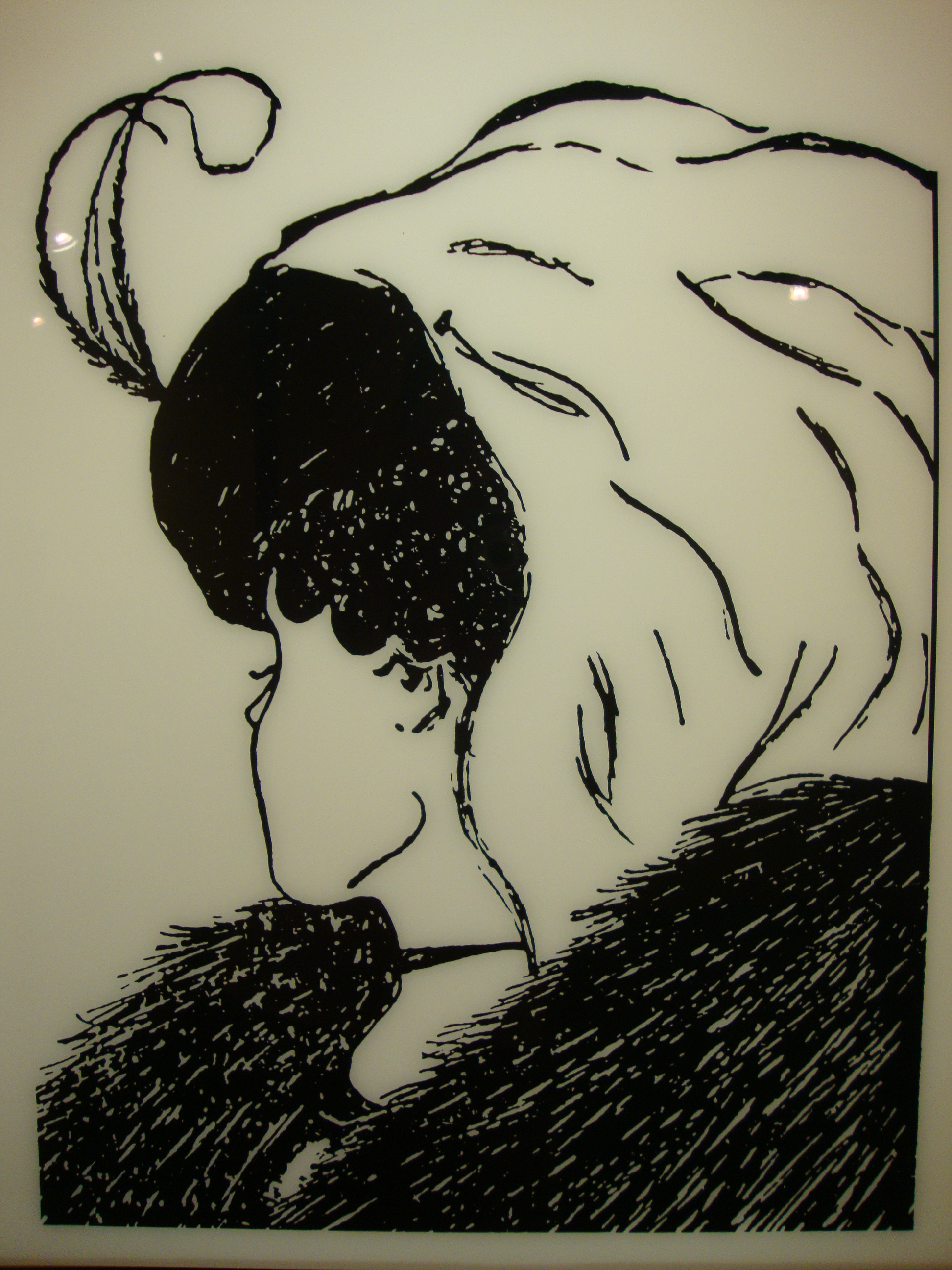
We are all unique individuals, and therefore will have differing views of what we see, hear, and so forth. It is only natural for us to pass on what we learn, even if we're not even that sure about it, thus information, or misinformation, spreads like wildfire.
So how do we decipher which is which? I propose the Socratic method - ask. Don't take everything you see or hear - even if it's from someone you trust - for granted. Delve deeper. Look harder. Search more intently. Find the balance between nosy and curious, between questioning and doubtful, and that includes with your own self. You are another person, and therefore could be wrong, but could also be right. The adventure lies in finding that out. And don't worry if it turns out that you were mistaken on a certain subject. The discovery itself catapults you into a prime opportunity to not be anymore!
Subscribe to:
Posts (Atom)